APEKS SUPERCRITICAL 2000-2OLD Extractor SUPERCRITICAL-CO2 2000-20LD
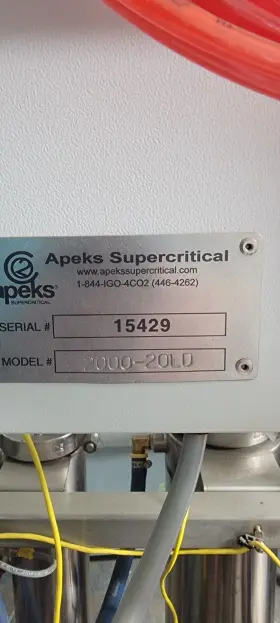
( Brand: Apeks Supercritical ), ( Manufacturer Part Number: 2000-2OLD ), ( Suitable For: Multi-tool ), ( Type: 2000 20ld )
Review APEKS SUPERCRITICAL 2000 2old Extractor 20ld
The APEKS Supercritical CO2 Extractor 2000-2OLD is a professional-grade, supercritical fluid extraction system designed for the efficient and high-yield extraction of valuable compounds from various plant materials. This extractor utilizes supercritical CO2 as the extracting solvent, offering several advantages over traditional solvent extraction methods.
The 2000-2OLD model is capable of handling a wide range of plant materials, from small samples to larger batches, making it a versatile tool for extracting essential oils, terpenes, cannabinoids, and other valuable phytochemicals. It boasts a high extraction throughput, ensuring that you can process a large volume of material in a relatively short period.
This extractor features a robust, stainless steel design, ensuring durability and longevity. It comes equipped with a high-pressure pump system capable of generating pressures up to 450 bar (6,500 psi), enabling efficient extraction under supercritical conditions. The system also includes a temperature controller to maintain optimal extraction temperatures, ensuring consistent results batch after batch.
The 2000-2OLD comes with a solvent recovery system, which allows for the efficient separation and recycling of CO2, minimizing waste and reducing operational costs. The system includes a distillation column and a condenser, enabling the separation and collection of extracted compounds from the CO2 stream.
This extractor is easy to use and operate, with an intuitive control system and clear visual indicators for various system parameters. It also includes a user-friendly software package, allowing for easy data logging, batch tracking, and process optimization.
The APEKS Supercritical CO2 Extractor 2000-2OLD is an excellent choice for professionals in the pharmaceutical, food, and cannabis industries seeking a high-performance, versatile, and efficient extraction system. With its robust design, high throughput, and advanced features, this extractor delivers consistent, high-quality results while minimizing waste and reducing operational costs.
Supercritical CO2 Extractor (APEKS Supercritical 2000-2 Old Model) - A Comprehensive Analysis
Introduction:The APEKS Supercritical 2000-2 old model is a supercritical CO2 extractor designed for extracting essential oils, cannabis concentrates, and other botanical extracts using supercritical CO2 as the solvent. In this analysis, we will discuss the key advantages and disadvantages of investing in this extractor to help you make an informed decision.
Advantages:1. Versatility: The APEKS Supercritical 2000-2 extractor is suitable for various applications, including the extraction of essential oils, cannabis concentrates, and other botanical extracts. This versatility allows users to explore different markets and applications.
2. Supercritical CO2 as a solvent: Supercritical CO2 is a clean and efficient solvent, leaving no residual impurities in the extracted product. Additionally, it is non-flammable and non-toxic, making it a safer alternative to other solvents like butane or ethanol.
3. High extraction yields: Supercritical CO2 extraction generally results in higher yields compared to other methods, as it can effectively extract both volatile and non-volatile compounds from the plant material.
4. Consistent product quality: The controlled conditions of supercritical CO2 extraction ensure consistent product quality, as the process can be easily repeated and optimized for specific applications.
5. Reduced post-processing: Supercritical CO2 extraction often requires minimal post-processing, as the extracted product is typically free of impurities and requires only minimal filtration and distillation.
Disadvantages:1. High upfront investment: The APEKS Supercritical 2000-2 extractor is a significant investment, with a high purchase price and additional costs for ancillary equipment and consumables.
2. Complex setup and operation: Supercritical CO2 extraction requires a more complex setup and operation compared to other methods. Proper training and expertise are necessary to ensure efficient and effective use of the extractor.
3. Energy consumption: Supercritical CO2 extraction requires a significant amount of energy to maintain the high-pressure and temperature conditions. This can result in higher operational costs.
4. Limited throughput: The APEKS Supercritical 2000-2 extractor has a limited throughput capacity, making it less suitable for large-scale commercial operations.
5. Maintenance and repair: Supercritical CO2 extractors require regular maintenance and potential repairs, which can add to the overall cost of ownership.
Conclusion:The APEKS Supercritical 2000-2 old model is a versatile and efficient supercritical CO2 extractor suitable for various applications, particularly in the essential oils and cannabis concentrate markets. Its use of supercritical CO2 as a solvent results in high-quality, consistent extracts with minimal post-processing. However, the high upfront investment, complex setup and operation, energy consumption, limited throughput, and ongoing maintenance costs may make it less accessible for some businesses or hobbyists.
Recommendation:For small to medium-sized businesses or individuals looking to produce high-quality, consistent extracts with minimal post-processing, the APEKS Supercritical 2000-2 old model could be a suitable investment. However, careful consideration of the potential costs, including the upfront investment, ongoing operational costs, and potential training expenses, should be taken into account before making a purchase decision. For those with limited budgets or smaller-scale operations, alternative methods like ethanol or CO2 subcritical extraction may be more cost-effective.
Details:
Please request for more pictures. Designed for versatility, this extractor is suitable a multitude of multi-tool applications, making it an essential addition to any gardeners toolkit. Whether you're tackling outdoor living or home garden projects, this extractor is engineered to deliver consistent results, helping you achieve your green thumb goals with minimal effort.
part #: 20002old prices
- $11500.00-$45000.00
specifications gardepatch:
- brand: Apeks Supercritical
- manufacturer part number: 2000-2OLD
- suitable for: Multi-tool
- type: 2000 20ld
general gardepatch:
- Yard, Garden Outdoor Living > Garden Hand Tools Equipment > Garden Tool Accessories
- condition: Used
returns gardepatch:
- policy: Returns Accepted
- time: 30 Days
- paid by: Buyer
- method: Money back
payments gardepatch:
- credit card: Discover
- wallet: Google-pay
- other
seller gardepatch:
- # reviews: 180
- rating: 100.0%
- city: El Cajon, California
shipping gardepatch:
offer gardepatch:
- availability: In Stock
- sold: 0
- best offers: True
- started: March 3, 2025
- options: Seller-arranged-local-pickup
- quantity: 1

5 offers $11500.00–$45000.00 USD
- Used. Offer #1 priced at $35650.00 + $Calculated delivery = $35650.00* total. Condition is Used Apeks Supercritical CO2 Extraction System Full 3 Piece Set 2000-5Lx20LD 20L.+$Calculated shipping
- Like New. Offer #2 priced at $11500.00 + $10.12 delivery = $11510.12* total. The Apeks brand is known for its quality and innovation in the field of heavy equipment, making this CO2 extractor a valuable addition to any business or industrial setting. The Apeks Super Critical CO2 Extractor is a top-of-the-line model designed for industrial use.+$10.12 shipping
- Used. Offer #3 priced at $45000.00 + $0.00 delivery = $45000.00* total. No chiller fluid left in vessels, ensuring the system is dry and protected. Apeks Supercritical Extraction System (Serial Number: 18630).FREE SHIPPING
- Used. Offer #4 priced at $10000.00 + $300.00 delivery = $10300.00* total. Title: Apeks Supercritical CO2 Extraction System - 1L Capacity, Fully Functional, Ready to Run! Look no further than this fully functional 1L Apeks Supercritical CO2 Extraction System! This unit has had limited use and is in excellent condition, ready to set up and start producing high-quality extracts.+$300.00 shipping
- Used. Offer #5 priced at $25000.00 + $20.95 delivery = $25020.95* total. APEKS Supercritical CO2 1500-1L Benchtop Extractor Closed Loop Unit.+$20.95 shipping